
StoveShelf: From 50 Units to a $10 Million Amazon Business
 ADelier Commerce
3 min read
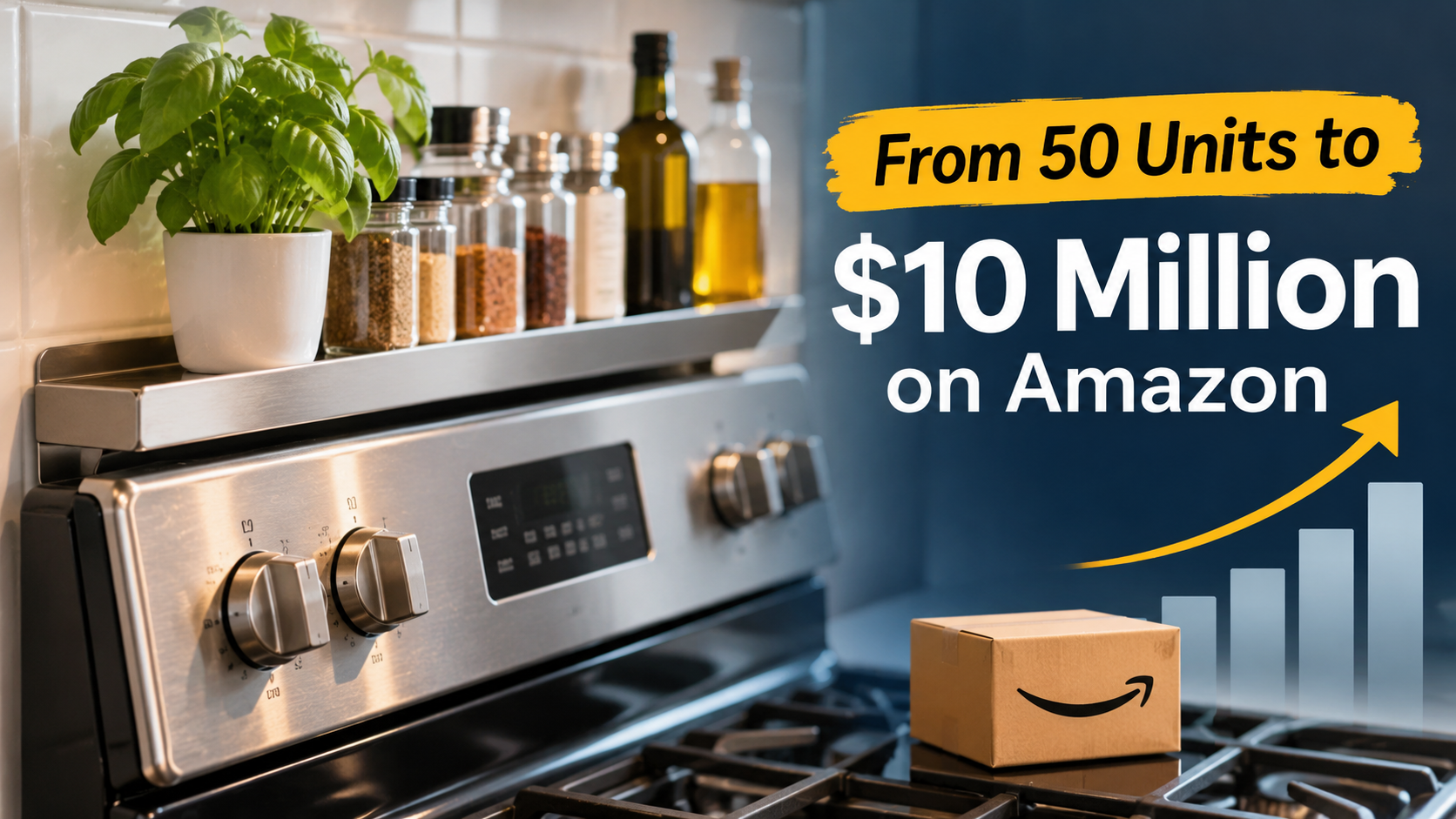
Sometimes the biggest business opportunities start with a very simple idea.
Scott Fleming, a Wisconsin woodworker, wanted more storage space in his kitchen. He created a simple prototype by attaching magnets to a piece of wood so it could sit on the backsplash behind his stove.
He searched online to see if someone had already created something similar.
He couldn’t find one.
So he decided to turn the idea into a business.
From 50 units to almost no sales
Fleming refined the product, eventually replacing the wood with metal, registered the StoveShelf domain and produced his first 50 units.
But there was a problem.
The product didn’t sell.
He had expected word of mouth to take off, but most of his initial sales came from friends and family. The product seemed to work — but customers weren’t finding it.
That was the turning point.
The problem wasn’t necessarily the product. It was visibility.
Amazon changed the trajectory
In 2017, Fleming launched StoveShelf on Amazon.
The difference was immediate. Within the first year, the business generated around $50,000 in sales. By 2020, annual sales had reached approximately $3 million.
The company also invested in improving its Amazon presence.
The original listing had basic photography. Over time, StoveShelf introduced higher-quality images, video and A+ Content.
And the results kept improving.
Eventually, the product started attracting attention outside Amazon too, including influencers and major publications. Amazon reports that StoveShelf has grown into a multimillion-dollar business with around $10 million in sales.
The lesson for brands
The StoveShelf story highlights something important about selling on Amazon:
A good product is not enough.
Customers need to be able to find it — and once they find it, the product page needs to convince them to buy.
That means success on Amazon depends on much more than simply launching a product.
It requires:
Visibility — getting in front of the right customers.
Strong listings — high-quality images, compelling copy and content that converts.
Advertising — using PPC to generate relevant traffic and support growth.
Data — understanding what customers are searching for and which campaigns and keywords are actually driving sales.
Optimisation — continuously improving the listing and advertising strategy based on performance.
StoveShelf also eventually turned to Fulfillment by Amazon (FBA) as order volumes grew. For Fleming, this removed much of the day-to-day burden of storing, packing and shipping orders and allowed him to focus on growing the business.
From a simple idea to a scalable business
The most interesting part of the StoveShelf story isn’t simply the $10 million in sales.
It’s the journey.
A simple product. 50 first units. Almost no sales outside friends and family. A move to Amazon. Better listings and content. Growing visibility. PPC and Amazon tools. And eventually, a multimillion-dollar brand.
Amazon didn’t invent the product.
It provided the infrastructure and access to customers that allowed a simple idea to scale.
And that is one of the biggest opportunities Amazon offers brands today.